How to Become a Teacher Fast
ON THIS PAGE
Pathways Step-by-Step Fast-Track Conclusion FAQs


Key Takeaways:
- The fastest way into a paid classroom role is often substitute teaching, provisional roles, or teach-while-you-learn pathways; requirements vary by state and district.
- If you already have a bachelor’s degree, alternative certification programs are usually the quickest route toward full licensure while working.
- Teacher shortages can speed up hiring, especially in rural districts and areas like special education, math, science, bilingual/ELL.
- Testing and paperwork are common bottlenecks; scheduling required exams early can shorten your timeline significantly.
- Online accelerated programs can reduce downtime with flexible pacing and frequent start dates, but clinical/student-teaching requirements may still set the pace.
Becoming a teacher fast is possible, but the quickest path depends on a few factors. The state you're in, existing education you may have already accumulated, and whether you’re aiming for a full teaching license or a more immediate classroom role can all impact your timeline. No matter where you're starting your teaching journey, this article is chock-full of ideas to help you get started.
My aim in writing this guide is to help outline some of the best fast-track teaching options that are also realistic and vetted by experts in the field.
I pulled in advice from educational professionals, including Mandi St. Germaine (educational leader and author with an M.Ed.), and Dr. Erin Sponaugle (former West Virginia Teacher of the Year). They discuss the fastest options to become a teacher, including discussion around some of the trade-offs, so you can choose a timeline that works best for your educational journey.

ADVERTISEMENT
Online Teaching Degrees You May Be Interested In
How Long Does It Take To Become a Teacher?
In most states, the “traditional” path to become a fully licensed K-12 public school teacher takes about 4-5 years or more. Many teaching roles in public schools require at least a bachelor’s degree, which takes around four years, and .
That said, "becoming a teacher” can refer to a spectrum of opportunities beyond the traditional timeline. There are routes to achieving this, but the path you are able to take depends on your experience, motivation, adaptability, and the state where you live.
Below are some of the key topics discussed in detail throughout this article:
- State-dependent: To become a fully licensed K-12 public school teacher requires a longer timeline than other options, but there are potentially shortcuts available to motivated individuals, like online teaching programs that are accelerated.
- District-dependent: Substitute teaching is one of the fastest routes into the classroom. Hiring requirements are often set by districts (e.g., background checks etc.) and can be much quicker than licensure.
- State/district-dependent: Emergency/provisional teaching opportunities can be the fastest entry into the field across certain states/districts. , for example, offers a temporary certificate that's issued after employment and fingerprint clearance. There are many state pathways designed as bridges toward the professional credential.
- School-dependent: Private schools may offer a quicker path into teaching because many . This could be your best option if you already have a bachelor's in another subject.
Can You Become a Teacher Faster Than the Traditional Route?
If you are dead set on becoming a teacher faster than the usual route, the key is choosing an option that fits who you are right now — your education level, your subject expertise, and how quickly you need to be earning a salary.
Teach While You Learn
If you already have a bachelor’s degree, the fastest on-ramp in many states is a . There are alternative certifications, provisional credentials, and (more recently) models like teacher apprenticeships. These pathways are built for career changers, and they can be hired sooner. This option requires working toward full credentials while teaching.
Provisional Rules
Some career-changers can move more quickly by targeting high-need subjects and schools (SPED, STEM, bilingual/ELL, CTE) where districts are more likely to sponsor candidates or place them quickly under allowable provisional rules.
Requirements and support vary widely by state and program, so outcomes depend heavily on the area you choose to focus on. These programs keep growing in popularity because they’re faster, cheaper, and more flexible than traditional university-based teacher prep.
Independent and Private Schools
If you’re flexible about where you teach, independent/private schools can move you toward your goal more swiftly because they do not always require state certification, and hiring standards are often set by the school rather than the state. (Some competitive private schools still prefer licensed teachers, but it’s not universally required.)
That said, in the 2022-2023 school year among private school teachers, 50% held master’s degrees, 39% held bachelor’s degrees only, and 10% held doctorates. In this way, it's an especially good option if you already have some higher education under your belt.
Finishing Your Degree Quickly
If you don’t have a degree yet, finishing your bachelor’s faster is possible through transfer-friendly, year-round, or accelerated formats. This can often be achieved through an online degree program.
Common Misconceptions
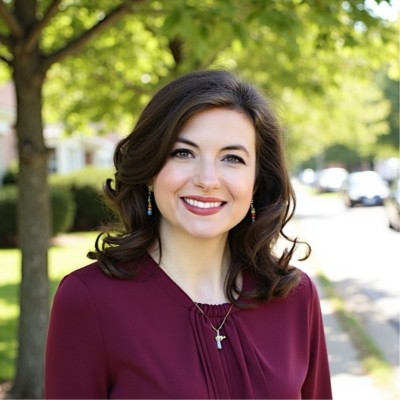
Speaker, Author, and Teacher
"What may seem easy to a teacher with teaching experience [who has] already earned their licensure/certification may not come as naturally to someone making a career change or working on their certification while working full-time, teaching or not. Anything you learn outside your field, especially in pedagogy and child development, will have a learning curve.
A fast-track or alternative program typically requires greater independence and self-sufficiency, especially if it is online and asynchronous, with little or no in-person instruction.
Another misconception about 'fast track' programs is that they will indeed be fast. Speed often comes down to the commitment of the person completing the program. A fast-track or alternative program typically requires greater independence and self-sufficiency, especially if it is online and asynchronous, with little or no in-person instruction. If you don't stay on pace, you likely won't complete the requirements within the time frame.
Another misconception is that alternative programs make it so that 'anyone can be a teacher.' Being, becoming, and staying a teacher requires dedication, resourcefulness, and the ability to connect with others. The qualities of those people mirror those of someone willing to go out of their way to learn something new and to nurture and educate students."
Steps For How To Become a Teacher Fast
Step 1: Understand Your State’s Teacher Certification Requirements
Most public-school roles require a degree, state certification, and required exams/background checks, so go straight to your state DOE teacher certification page and make a list of the required tests, steps, approved pathways, and processing timelines you’ll need to plan around.
Dr. Sponaugle: "Many states are in a teacher deficit. Depending on the state, some allow emergency or temporary certification to meet the growing need for teachers. Having basic requirements (such as diplomas/transcripts, background checks, and necessary screening, such as TB testing, for example) is a non-negotiable that will prevent you from getting on the school district-approved list to even substitute (so it is best to search for the basic things that will be needed to get on the approved list for substituting and hiring).
While the bar may be lower to get into teaching through substituting, becoming a permanently hired professional employee (also known as highly qualified) requires passing certification exams to receive either licensure or an additional certification (for example, the PRAXIS exams). It is important to review the required tests and the scores needed so you are prepared to take them when you are ready."
Step 2: Choose the Fastest Path to the Classroom
Emergency/provisional licenses
Some states/districts issue temporary licenses that allow you to teach while you're in the process of fulfilling requirements. These can be tied to shortages and district needs, and can be the fastest way to start teaching in a public school immediately.
Dr. Sponaugle: "I would say emergency and teach-while-you-learn models allow the swiftest path to the classroom. Some risks are that you will not know the ins and outs of how to teach, even if you understand the content, and that you will be thrown into situations that are less than ideal and not the norm for most teachers (especially with emergency). The important thing is to advocate for your needs and your students. Seek a mentor if one is not provided for you and make a concerted effort to learn what you need to know to be most effective in the classroom."
Alternative certification programs
Certification programs are most often for folks who already have a bachelor’s degree. Some routes will even let you work in a classroom while you're completing pedagogy coursework.

Educational Leader
"In my experience as an elementary curriculum coach, I get requests to help individuals [find] a faster way into the classroom. In general, the quickest route for many individuals will be an alternative certification route that will allow them to enter the classroom while pursuing additional educational requirements.
I have guided aspiring educators through this route and have found that it is the most efficient way outside of traditional certification routes.
The most common myth is that fast track options are less difficult. The truth is that fast track pathways are often more rigorous because individuals are learning to teach while teaching full time.
Another myth is that certification is transferable from state to state automatically. State requirements are crucial to an individual being able to start teaching, depending on the state requirements for testing schedules, background screening, and certification requirements.
As an educator who has been through both of these processes and moved due to my husband's military career, this pathway creates more difficulties than traditional certifications. Preparing for testing requirements is also another struggle educators coming into the profession often encounter that can delay certification. To maximize timing, substitute teaching or provisional licensure can be a strategic way to begin. However, alternative certification programs get candidates in the classroom the fastest; although, these programs need to find a balance between the high level of responsibility and continuous training."
Step 3: Leverage Your Existing Education or Work Experience
If your goal is speed, the quickest path can be the one that builds on what you have already achieved so you’re not starting from scratch. Career-changers can move faster when they have a non-education bachelor's degree, a strong content background (especially in fields like STEM), and/or professional experience relevant to what they want to teach. Some of the quickest paths include:
Alternative Certification
If you already have a non-education bachelor’s degree, you may be able to move faster through alternative certification or other “teach-while-you-learn” routes. These programs help bachelor’s-degree holders enter the classroom without completing an entire education degree first, often by pairing supervised teaching with required coursework and state steps.
Accelerated Post-Baccalaureate and Master's
There are also options to get an accelerated post-baccalaureate certificate or master’s in the field with licensure if you are set on public-school teaching. This focuses only on required pedagogy, clinical experience, and licensure steps, without having to earn a second bachelor’s. Many programs are structured to be completed in roughly 12-18 months, depending on your state, the program's pacing, and placement requirements.
Career and Technical Education
If you have strong professional experience in a trade or technical field, a Career and Technical Education Teacher (CTE) pathway can be one of the fastest on-ramps. is designed to recognize industry background as a major qualification, meaning that relevant work experience is central to eligibility.
Paraprofessional to Teacher
If you’re already working inside a school system, look for . These pathways intentionally recruit existing school staff and support them in becoming certificated teachers, frequently through district partnerships that allow candidates to keep working while completing preparation requirements.
Apprecenticeship
Finally, keep an eye on paid teacher apprenticeship models, which formalize the earn-and-learn approach. In this route, candidates receive on-the-job training and mentoring while completing related education and credential steps. This can accelerate entry because it’s structured around rather than waiting until everything is all lined up before you step into a teaching role.
Step 4: Pass Required Exams as Early as Possible
Testing is a very common bottleneck, especially if you wait to register, miss score-release windows, or need a re-take. Most states require some mix of content knowledge exams, a pedagogy exam, and sometimes basic skills tests (or approved alternatives/waivers).
Your fastest move is to identify your state’s required tests right away, then schedule them as early as you reasonably can. Earning a passing score can unlock eligibility for certain certification routes and/or hiring timelines.
Strategies to pass required exams sooner
Dr. Sponaugle: "Depending on the test, there may be resources and sample test questions on the test website (ie, PRAXIS). For some exams, recommended study materials and books are available. Although I did not use alternative licensure for my initial teaching degree in elementary education, I did take a PRAXIS exam to add an additional certification (Art PK-Adult). Something that helped me prepare was Quizlet flashcard decks for my test area (online flashcards). I also listened to podcasts for my subject area and viewed multiple Khan Academy videos for my content area."
Step 5: Consider Teaching in High-Need Areas
If you’re trying to shorten the hiring process itself, you can always aim to teach at the places where vacancies are hardest to fill. States formally report their teaching shortage areas each year through the .
Across the country, teacher shortages tend to cluster around the same pressure points, especially for the subjects of special education, math, and science. In the 2024-2025 school year, federal shortage data analyses show these are among the most commonly reported areas across states, which helps explain why districts are often more open to faster hiring pipelines in these fields.
Location matters, too. NCES data shows that rural schools are more likely than suburban or city schools to report that they found it “very difficult” to fill vacancies in subjects like math and biology/life sciences. So, if you're flexible on geography, it can shorten your job search while increasing the level of support you'll receive while you complete remaining requirements.
Dr. Sponaugle: "While not guaranteeing faster certification overall (at least for formal or permanent positions), high-need fields such as science and math would certainly be sought after. There may be the misconception that because the person has the expertise, they will certainly be able to teach the subject. It is important that those candidates advocate for themselves and their needs, and seek to learn the pedagogical practices that make someone an effective teacher."
Step 6: Explore Online Accelerated Teacher Prep Programs
Online formats can speed things up significantly. Online schools usually offer self-paced learning, which can be entirely asynchronous or taught in a hybrid learning format, depending on the program.
Online teaching degrees are typically built for working adults, so they are designed with the flexibility to fit into your schedule and are generally very transfer-friendly. Every program is a little different, but below are some examples of helpful features to look out for:
Competency-based learning
Some schools, like (WGU), offer teaching programs online that have "competency-based pacing," which means you don't even have to wait for semesters to be over to get through the material. It all comes down to you and what you can handle (i.e., how fast you can prove mastery). In this kind of learning model, you can lower the total time required to help reduce cost. WGU's tuition is per a 6-month term, so it's up to you to complete as many courses as you're able during that term. Basically, if you want to study intensely, you can finish courses sooner. It really is that simple.
Monthly start dates & year-round enrollment
Teaching programs can also speed up the process by having monthly start dates and year-round enrollment, like at National University (NU). This reduces the waiting time to get started because you can sign up and get going as quickly as next month.
Faster classes
is an example of a school that hosts online teaching programs that break the mold of traditional course blocks, offering shorter weeks. ASU Online's 7.5-week class covers the same content but compressed into less time. Faster classes don't always mean you earn your degree more quickly, but they do give you the option to move faster by successfully maintaining the pace you want and stacking the sessions efficiently.
Risk-free trial
Similarly to ASU Online, the University of Arizona's Global Campus (UAGC) has a model built around 5-week undergraduate courses and 6-week graduate courses; however, what makes this one stand out is its risk-free trial concept. This can reduce the chance of a false start, which can ultimately save you time. At UAGC, you can attend the first three weeks of your first course “without any financial risk.” If you choose to opt out during that window of time (and meet the Promise conditions), you leave without any financial baggage. This can also help speed up your decision-making, allowing you to dip your toes in and see if this is really what you want to do.
If affordability matters, you can pair “fast” with “cost-conscious” by comparing OnlineU’s affordable online education degrees.
Step 7: Start Teaching While Completing Certification
Some teaching degree pathways let you start teaching while you complete certification, which can be the most realistic way to become a teacher fast because you’re earning a paycheck and building classroom experience while you finish the required steps.
Look at the state where you want to teach. You'll likely be able to find routes where eligible candidates can teach under a temporary certificate while working toward professional certification. This tends to work best if you already meet minimum eligibility, can secure a district willing to hire you on that pathway, and feel ready for a steep learning curve during your first year.
A Fast Track To Becoming a Teacher: Start as a Substitute
Dr. Sponaugle: "The most realistic way to become a teacher quickly (and to gain classroom experience) is to substitute in your local school system. Many school districts are experiencing a teacher shortage and rely on day-to-day and permanent substitutes to fill positions and keep teachers in front of students. Sometimes, this experience can be used for credits or count as teaching experience toward hours for a degree or licensure program (you would need to check with your institution).
The most realistic way to become a teacher quickly (and to gain classroom experience) is to substitute in your local school system.
"If someone wants to become a teacher but has no prior classroom experience, substituting is invaluable. Not only will you gain teaching experience and learn to handle student issues that arise, but you will also build connections and rapport with other teachers and administrators, which will be beneficial when it comes time to fill teaching vacancies. They will have firsthand knowledge of how well you interact with students and fit into their school. Substituting also lets you see which schools you prefer to work in and verify the content and age level of the students you want to teach. You have nothing to lose by substituting.
Substitute positions are not guaranteed, especially if someone applies for a teaching job and meets all the certification requirements. If you already have a degree and are seeking to add teacher certification (or are currently working toward it), schools may be inclined (depending on the shortage and need) to advocate for you and keep you on their staff while you complete your requirements.
A program that you can complete online and at your own pace will provide you with the flexibility to substitute (either day-to-day or permanently) while earning your certification."
How To Become a Substitute Teacher
Exact rules vary by state/district, but many substitute roles require the following as a general rule:
-
At least some college credit or a bachelor’s degree
-
Background check/fingerprinting
-
District onboarding/training
Final Takeaways
Becoming a teacher fast is less about finding a “magic solution” and more about picking the right on-ramp for your specific situation. There are benefits and trade-offs with all of the choices discussed in this article. Dr. Sponaugle's last word of advice is, "Be willing to try new and different classroom settings, content areas, and grade levels if it means getting your foot in the classroom door — you might surprise yourself with your strengths and preferences the more you have the opportunity to teach."
The key is to not get stuck, which is why we talked about all the ways you can get delayed (e.g., state rules, testing windows, and even decision fatigue). Dr. Erin Sponaugle adds: “View yourself as a student — set a schedule, make time for homework, and commit to reaching your goals and staying on a timeline… Be willing to try new and different classroom settings, content areas, and grade levels if it means getting your foot in the classroom door.”
Your next 3 moves:
- If speed is the priority, explore substitute roles, provisional openings, and high-need areas.
- Pull up your state DOE requirements to understand what's required of you.
- Write down the fastest approved pathway for your background.
Frequently Asked Questions
What Is the Fastest Way To Become a Teacher With a Bachelor’s Degree in Another Field?
Teaching in a private school can help you get started. This is because many states do not require the same state license that's needed for teaching in public schools.
If you already have a bachelor's in something that's not education-related and want to teach in the public school system, the fastest route is an alternative certification or an alternative teaching program that's specifically designed to expedite helping non-teachers become a teacher. This route is available across the majority of states.
Here's how it works:
- Pick your desired state.
- Pick your chosen grade/subject.
- Pass skills tests (if required).
- Enroll in a state-approved alternative teaching route, called an Educator Preparation Program (EPP).
- Teach on a temporary certificate while finishing the required pedagogy coursework (if allowed).
Can I Become a Teacher Without a Degree?
In the public school system (grades K-12), a bachelor’s degree is the standard baseline for becoming a teacher. It's a non-negotiable if you want to teach in a public school anywhere in the U.S. That said, some private and charter schools can have a different set of rules. If you're flexible about the school setting, it never hurts to check.
You can almost always work as a substitute teacher right away , especially if you have at least some college credit. It's a very easy way to get into the classroom quickly and start gaining experience, although subbing does not make you a fully certified teacher. The rules can vary a lot (even by the districts within the states), so the most reliable guidance you can get about subbing in your area must come from your state's education agency.
If you want the quickest way to start teaching in schools without a degree, the best bet is often:
- Start substitute teaching, as long as your state/district allows it without a bachelor’s.
- Earn your bachelor's while you sub part-time.
- Move into an alternative certification/EPP to become fully licensed.
Can I Teach in a Public School Before I’m Fully Certified or Licensed?
Yes, it's often the case that states will allow teaching under a temporary/emergency/provisional/intern credential or waiver, especially during teacher shortages.
How Long Does Alternative Teacher Certification Take, and Can I Work While Finishing It?
“” alternative teaching routes are commonly structured around 1-2 years of training (i.e., coursework and mentoring) while you teach. Requirements vary by state.
What Tests Do I Need To Pass To Become a Teacher? How Long Do Scores Take?
Tests are state-specific. But most states require some mix of the following:
- Basic skills tests in reading, writing, and math
- Subject-matter tests that revolve around specific grades or subjects
- Pedagogy/professional knowledge tests
In terms of how long these tests take, let's look at the Praxis as an example since that's a common one in many states. The "combined” version is scheduled as multiple timed sections (reading, writing, math), and it's generally a sitting time of several hours. If you want to know when you'll get your score back, you can check their .